Growing Orchids: September in St. Augustine
If you like what you see, feel free to leave a donation; just click on the Tip Jar. Thank you!Based on AOS monthly checklists by Robert Scully and Ned Nash & James Rose, adapted to St. Augustine by local growers
General Orchid Growing Tips
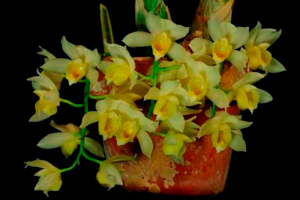
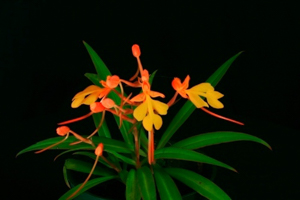
The welcome transition to fall is upon us. Once the temperature and humidity mediate, you’ll notice many of your plants putting on a second growth spurt. Reward them by watering a little more frequently with dilute fertilizer. You can expect the emergence of buds on many orchids from the cattleyas, evergreen dendrobiums and vandas to cycnoches, catasetums and miltonias. Select the ideal spot for the plant and place pendulous bloomers atop an inverted pot. Support the inflorescence as it emerges and open the sheath to prevent the accumulation of moisture around the developing buds.
Cattleyas
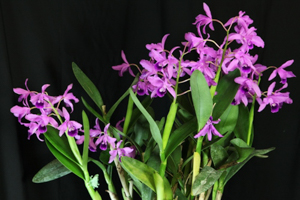
Despite the shortening days and lowering angle of the sun, you will see a flush of new root tips. Keep water and fertilizer in balance with heat and light. Check plants for potting needs for the last time. Any in dire need should be repotted as there is just enough of the growing season left for plants to establish before the days get short and cold. The spectacular, multiflowered C. bowringiana should be in sheath. Observe the puffy sheath structures often, they may need to be opened at the tip to encourage evaporation of condensation that forms around the buds. C. labiata and its hybrids will begin to flower this month along with the spectacular and fragrant forms of the species C. percivaliana.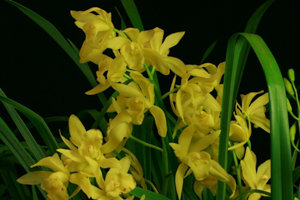
Cymbidiums
Through diligent breeding programs, the cymbidium season gets stretched longer and longer. Cym. ensifolium hybrids will bloom first with the winter blooming standard sized hybrids soon to follow. Stake Inflorescences and move plants to a shadier location to help the flowers develop.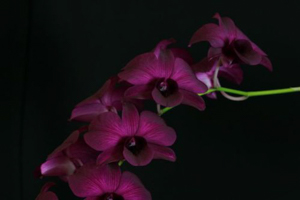
Dendrobiums
This is the season for the phalaenopsis and canaliculatum type dendrobiums. The long, arching sprays of flat dark red-purple to white or pink saucer-like blossoms provide weeks of satisfaction. Fertilize with low nitrogen fertilizer for the best flowers. Nobile-type hybrids should continue to be maintained on a nitrogen free fertilizer program. You can start to gradually reduce watering frequency on the winter dormant dendrobiums.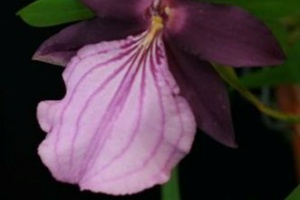
Oncidiums
Of the three popular pansy orchids Miltonia xbluntii, roezlii and spectabilis, the latter is probably the most showy. The reddish purple flowers of Milt. spectabilis var. moreliana usually appear singly and last for weeks.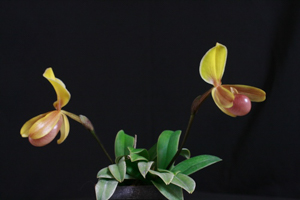
Paphiopedilums
Standard green-leaved paphiopedilums begin to show their bloom sheaths this month. Late season heat waves can blast these early sheaths, so provide proper cooling and air circulation.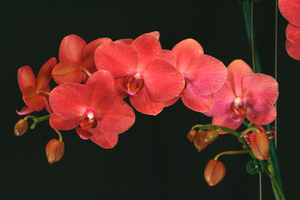
Phalaenopsis
The bulk of this season's growth is being ripened this month. Begin to watch watering more carefully and reduce feeding proportionately with reduced watering needs. Phal. hieroglyphica flowers reliably in the autumn. Its fragrant pale yellow flowers are distinctively marked with well defined brown lines on the sepals and petals. Phal. equestris and Phal. lindenii may also show their best now, the former may be everblooming through spring and the latter will arouse curiosity with its attractively striped lip.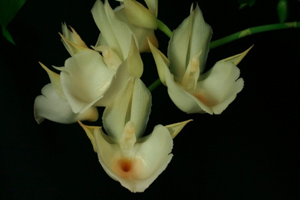
Vandas
Autumn is typically the end of the growing season for the catasetum relatives. Plants may produce flowers from pseudobulbs with leaves, or in some instances, from bulbs that have already lost their leaves. Watch the undersides of the leaves to control spider mites which seem to find these delicacies just as the foliage reaches its prime or plants are about to bloom. Support the basal racemes of catasetums as they emerge and consider placing the pots on inverted pots to provide room for them to hang freely.